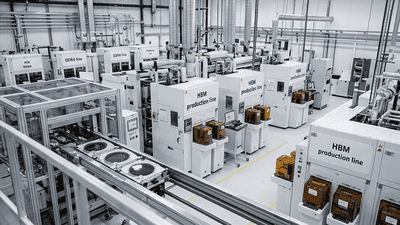
In 2026 the semiconductor landscape reached a decisive inflection: the combined capital expenditure (capex) directed by the industry’s Big Three memory makers—SK Hynix, Samsung, and Micron—toward High-Bandwidth Memory (HBM) and its enabling packaging technologies exceeded 50% of total industry HBM-capex for the first time. This milestone matters because it signals concentrated investment toward premium memory and packaging ecosystems that underpin AI accelerators, HPC clusters, and advanced datacenter architectures.

What does “HBM capex share >50%” mean?
When we say the Big Three’s HBM capex share exceeds 50%, we refer to the aggregate portion of capital spending allocated to HBM die production, TSV/hybrid-bond tooling, interposer capacity, and advanced packaging lines (including CoWoS, hybrid-bond assembly, and microfluidic-enabled packaging) that is funded and executed by SK Hynix, Samsung, and Micron combined. In practical terms, these firms now account for the majority of incremental investment dollars accelerating HBM volume, capability, and yield improvement worldwide.
This concentration is the product of strategic choices: large-scale wafer starts for HBM die, deliberate vertical integration or preferential OSAT partnerships for packaging, and long-term commercial commitments from hyperscalers underwriting capex risk. The result is a de facto consolidation of where the most advanced HBM capacity and manufacturing expertise will be built and scaled over the coming years.
Why the Big Three led the surge
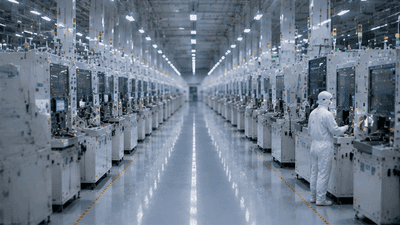
Several interlocking reasons explain why SK Hynix, Samsung, and Micron moved earlier and more aggressively than other players:
- Strategic alignment with AI demand: Hyperscalers and accelerator OEMs made large, visible commitments for HBM-equipped platforms—contracts that justified aggressive capex to meet forecasted demand.
- Economies of scale: HBM production benefits from scale in both wafer fabrication and packaging yield learning. The Big Three already operate large DRAM fabs and integrated packaging assets, allowing them to amortize the high fixed costs of HBM-capable lines more effectively.
- Vertical integration and margin capture: Owning or controlling packaging steps (interposers, hybrid-bond assemblies) preserves module-level ASPs and provides better control over yield and time-to-market.
- Financial firepower: Sustained capex commitments required to build hybrid-bond and interposer capacity favor large, cash-rich incumbents able to absorb early yield losses and fund multi-year ramps.
Smaller players and regional challengers found it difficult to match this pace without either strategic partnerships or government-backed support.
How this changed the investment map
The result is a shifted capex map for 2024–2026 and into the near-term future:
- Concentrated wafer investments in South Korea and select U.S. fabs: SK Hynix and Samsung expanded Korean wafer capacity and selectively shifted lines to HBM-capable reticles; Micron focused HBM capex in strategic U.S. nodes to meet domestic demand and regulatory preferences.
- Packaging and OSAT prioritization: A portion of capex was directed to secure advanced packaging throughput—either by expanding in-house assembly or funding privileged capacity at select OSATs.
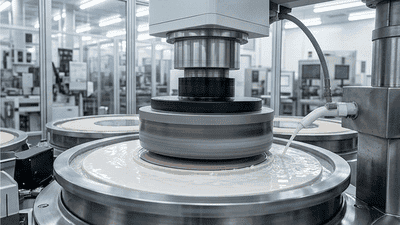
- Equipment and materials spend: Significant shares of capex flowed indirectly to hybrid-bond tooling, CMP and planarization equipment, high-precision metrology, and suppliers of specialized consumables (precursors, underfills, thermally conductive films).
- Co-investment arrangements: Hyperscalers and large OEMs provided prepayments or co-funding for packaging lines, shortening vendor payback periods and making heavy upfront investment more palatable.
These moves raised entry barriers for later-stage competitors and set the stage for a two-tier market where the Big Three define performance and allocation for top-tier HBM products.
Implications for supply and allocation

Capex concentration created several observable effects on supply dynamics in 2026:
- Prioritized allocation to anchor customers: Firms that underwrote capex or held strategic contracts received priority for early output, leading to short-term supply tightness for smaller buyers.
- Faster yield learning where capex concentrated: Large, repetitive runs of the same reticle and package formats accelerated yield improvements, improving finished-module output and reducing per-unit costs faster in Big Three-dominated lines.
- Regional chokepoints formed: Geographic concentration of wafer and packaging lines around a few campuses or regions increased systemic risk to localized disruptions (weather, labor, regulatory actions).
- OSAT demand compression: Even with capex committed, packaging tooling and skilled process engineers remained constrained, giving premium pricing power to selected OSAT partners and specialized interposer fabs.
For buyers, this meant both better long-term availability of validated HBM modules from the Big Three and short-term allocation challenges for non-strategic customers or new entrants.
Competitive dynamics and market structure
Concentrated capex by SK Hynix, Samsung, and Micron reshaped competitive dynamics:
- Faster innovation cycles: With more capital committed, these firms could fund parallel process-development tracks (HBM3e variants, HBM4 pilot lines, hybrid-bond method improvements), shortening time between technology nodes.
- Higher barriers to entry: New entrants face capital intensity and customer-preference hurdles—winning share requires either differentiated technology, discounting, or government-backed incentives.
- Potential for tacit coordination: Large incumbents investing in similar technologies and signing long-term deals with the same hyperscalers can create de facto supply patterns that are hard for smaller suppliers to disrupt.
- Consolidation pressure on OSATs and interposer suppliers: Suppliers that could not scale or invest in hybrid-bond capabilities risked being squeezed out or acquired by bigger customers seeking tighter vertical control.
The net effect is a market where capacity leadership and integrated packaging capability become key competitive moats.
Pricing, margins, and the P&L effect

Heavy capex toward HBM influenced pricing and margin dynamics across the memory ecosystem:
- HBM ASPs stayed elevated initially: Early scarcity in finished, packaged HBM allowed suppliers to maintain premiums, boosting gross margins on HBM product lines.
- Margin concentration: Companies that captured both wafer and packaging revenues improved blended gross margins materially as HBM share rose in overall product mix.
- Downstream price signal: Over time, as packaging capacity came online and yields improved, ASP compression moderated—yet the ability of the Big Three to control allocation tempered aggressive price falls in the short term.
- Capex ROI timelines: Because HBM lines require longer yield-learning periods and packaging investments, return on invested capital is slower and front-loaded; firms must manage investor expectations about near-term margin dilution during ramps.
Investors evaluating memory makers in 2026 needed to balance near-term capex drag against the medium- to long-term margin recovery enabled by higher HBM mix.
Supply-chain and geopolitical risk considerations
Concentrating capex in a small set of integrated players and certain geographies has geopolitical and supply-chain implications:
- Strategic dependency: Hyperscalers and governments depending on HBM must consider whether relying on a small set of suppliers introduces systemic risk, particularly under export-control regimes or geopolitical tensions.
- Policy friction and incentives: Governments responded with incentives and regulations—either to support domestic packaging capacity or to encourage diversification across allied jurisdictions.
- Reshoring and allied sourcing: Some customers insisted on onshore production for critical systems or required dual-sourcing from allied suppliers as a risk mitigation strategy.
- Vendor leverage in negotiations: Suppliers with decisive capex shares could negotiate terms favorable to them; customers sought long-term contracts and co-investment to secure priority allocation.
These dynamics created a delicate balance between supplier market power, customer risk mitigation, and national-security concerns.
Opportunities for suppliers and adjacent industries
Concentrated HBM capex opens several opportunities across the broader ecosystem:
- OSATs with hybrid-bond capability: High-margin opportunities exist for OSATs that can qualify as preferred partners and scale to meet Big Three demand.
- Equipment vendors: Demand for hybrid-bond tools, planarization systems, high-precision metrology, and microfluidic integration modules surged—creating multiyear order backlogs for tool suppliers.
- Materials and consumables: Specialty precursors, thermally conductive insulating films, and low-defect interposer silicon became higher-value consumables with recurring revenue potential.
- System integrators and cooling vendors: As HBM-enabled accelerators increased power density, demand for advanced thermal solutions, rack-level coolant infrastructure, and retrofit services expanded.
- Test and reliability specialists: New test flows and qualification demands created opportunities for firms offering turnkey electro-thermal testing, failure analysis, and accelerated lifecycle validation.
Smaller firms that aligned early with the Big Three or their OSAT partners captured outsized growth during the HBM ramp.
Risks and potential negative outcomes
Despite many benefits, the capex concentration also entails risks that stakeholders should monitor:
- Overcommitment: If demand projections for HBM slow (for example, due to shifts in cloud capex or alternative memory architectures), concentrated capex could lead to overcapacity and asset impairments.
- Supply fragility: Geographic concentration leaves production vulnerable to localized disruptions—natural disasters, localized regulatory actions, or supply-chain blockages for critical equipment or consumables.
- Market power misuse: Excessive allocation control could reduce competitive pricing dynamics and slow innovation outside the dominant suppliers’ roadmaps.
- Innovation bottlenecks: If capex concentration narrows the set of design-in partners, smaller accelerators and innovative chiplet vendors may face higher barriers to entry or longer qualification cycles.
Mitigation of these risks requires active engagement by customers, policymakers, and suppliers to ensure balanced growth and contingency planning.
Practical recommendations for stakeholders
Given the concentration of HBM capex with the Big Three, here are pragmatic actions for different stakeholders:
- Hyperscalers and OEMs: Secure long-term supply agreements, consider co-investment where scale justifies, and maintain secondary qualified suppliers for critical products to reduce single-supplier exposure.
- Smaller memory and packaging firms: Seek niche differentiation (e.g., specialized interposer sizes, unique thermal solutions) and pursue partnerships or M&A to access capital and scale quickly.
- OSATs and equipment vendors: Prioritize scaling hybrid-bond capability, offer integrated yield-acceleration services, and enter strategic alliances with Big Three suppliers to become preferred partners.
- Investors: Look for companies showing disciplined capex allocation, clear path to yield improvement, and visible contractual commitments from hyperscalers—these are better positioned to monetize the HBM ramp.
- Policymakers: Encourage regional redundancy in advanced packaging through incentives and workforce programs, and promote alliances that reduce systemic supply risk for strategic compute components.
What to watch in the next 12–24 months
Several indicators will reveal whether the capex concentration accelerates beneficial outcomes or creates problems:
- Packaging throughput and yield metrics: Faster yield improvement and packaging throughput validate capex effectiveness and presage ASP normalization without supply squeezes.
- Allocation patterns: Public or leaked allocation decisions revealing how much output is reserved for anchor customers indicate who benefits most from prioritized capex.
- OSAT expansion plans: Large, credible OSAT capex announcements and equipment deliveries are signs that packaging bottlenecks are easing.
- Demand signals from hyperscalers: Renewed large-scale procurement cycles and co-investment renewals indicate sustained long-term demand that justifies the capex concentration.
- Policy shifts: Subsidy, export-control, or trade-policy changes could reshape where future capex flows and how customers manage sourcing risks.
Tracking these signals helps stakeholders assess whether the 50%-plus capex concentration becomes a durable structural advantage for the Big Three or a transient alignment tied to a specific demand cycle.
Conclusion
The Big Three memory makers exceeding 50% of HBM-directed capex in 2026 marks a critical turning point—one that accelerates HBM availability and capability while concentrating technological leadership and supply-chain influence. This concentration yields many benefits: faster yield learning, improved module quality from scale, and clearer roadmaps for HBM3e and HBM4 deployments. It also concentrates geopolitical and operational risk, raises barriers to new entrants, and requires careful supply-chain and procurement strategies from buyers.
For suppliers and investors, the primary opportunity lies in aligning with the dominant capex flows—supplying equipment, materials, and services that ease the yield and packaging bottlenecks. For hyperscalers and OEMs, securing allocation via long-term commitments and co-investment remains the most reliable path to guaranteed supply. And for policymakers, the new structure argues for balanced incentives to ensure regional redundancy and resilience in a technology that increasingly underpins national strategic capabilities.